The Majestic Kayonza Archdeaconry: Where Green Gold Meets Sacred Ground
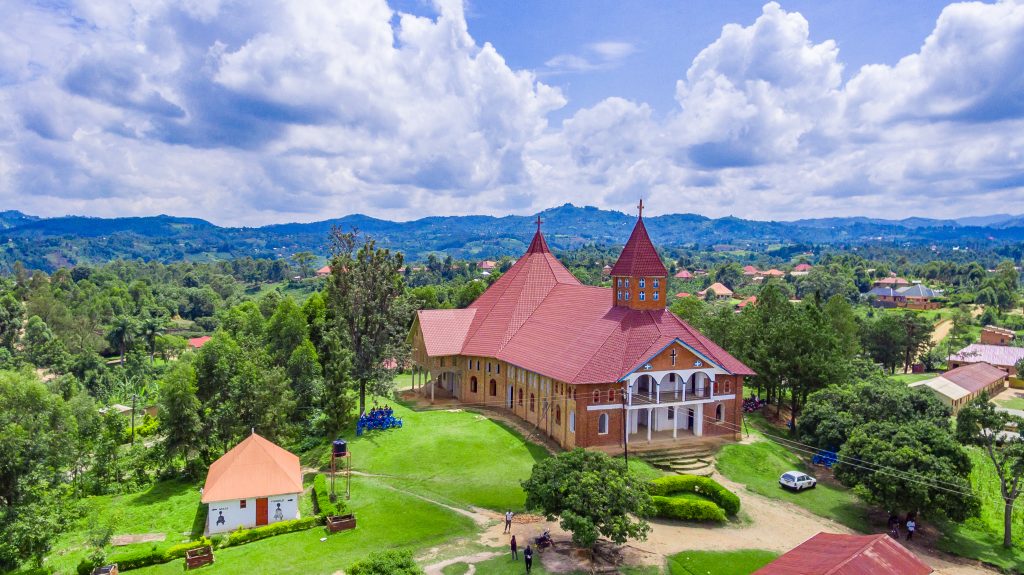
Perched on the rugged, mist-kissed eastern edge of the Albertine Rift Valley in Kanungu District, Kayonza Archdeaconry stands as one of the most unique, prosperous, and geographically stunning strongholds of the Diocese of Kinkiizi, Church of Uganda.
To visit Kayonza is to experience a landscape where lush, undulating carpets of emerald tea plantations roll directly up to the ancient, towering walls of Bwindi Impenetrable National Park. The archdeaconry is an administrative triumph, a historical bastion of the East African Revival, and an economic trailblazer within the province.
1. Distinctive History: Faith on the Forest Frontier
The spiritual heritage of Kayonza is deeply intertwined with the pioneering expansion of the Anglican Church into the remote fringes of Kinkiizi during the mid-20th century. While the foundational sparks of the diocese were struck at the King’s Court in Kanungu in 1915, Kayonza developed its own distinct identity as the “frontier church.”
Early catechists and converts had to contend with a landscape that was physically cut off from the rest of Kigezi by dense, primary tropical rainforests. The area was wild, rugged, and dangerous. Kayonza grew through the sheer resilience of localized house fellowships born out of the 1939 Spiritual Revival.
When the Diocese of Kinkiizi was formally inaugurated on May 7, 1995, Kayonza was recognized as a cornerstone territory—possessing a fierce spirit of self-reliance, a deeply entrenched community identity, and an exceptional capacity for institutional organization.
2. The Legacy of Leadership: Archdeacons of Note
Kayonza has historically been a high-profile, demanding deployment within the Diocese of Kinkiizi. It requires leaders who are not just spiritually mature, but possess sharp administrative acumen to navigate the complex social structures of a wealthy tea-growing and tourism-adjacent community.
Over the years, a succession of dedicated servants of God have occupied the Archdeacon’s seat at Kayonza, shaping its infrastructure and expanding its sub-parishes:
- Early Transition Stewards: Pioneering reverends who oversaw Kayonza’s growth from a rural parish into a sprawling, multi-congregation administrative hub.
- Rev. Canon David Keesiga: A seasoned administrative pillar in Kinkiizi who brought seasoned structural discipline and educational focus to the archdeaconry during a period of rapid community transition.
- Subsequent Visionaries: Leaders who successfully integrated the church’s programs with modern community health projects, environmental conservation advocacy alongside Bwindi, and localized savings schemes.
- Modern Administrators: Contemporary archdeacons who work hand-in-hand with the community board rooms of local agricultural enterprises to ensure the church remains a primary stakeholder in regional development.
- Rev. Canon Gad Tibeijuka Ngyemura is the current archdeacon of Kayonza stationed at All Saints Church -Butogota
3. The Major Source of Income: The Reign of “Green Gold”
Unlike archdeaconries that rely strictly on subsistence farming or volatile cross-border trade, Kayonza’s economy is anchored by a massive, multi-billion-shilling agricultural engine: Tea.
The Kayonza Growers Tea Factory Alliance
Established historically in 1963, the Kayonza Growers Tea Factory is located just 15 kilometers north of Bwindi. This factory is a global model for smallholder farmer success, supporting over 7,800 local out-growers—a massive percentage of whom are active Christians within the Kayonza parishes.
The Archdeaconry leverages this economic juggernaut through multiple strategic avenues:
- Direct Church Plantations: The Archdeaconry and its constituent parishes own substantial plots of land dedicated entirely to tea cultivation, bringing in a highly predictable, monthly stream of direct revenue.
- The Tithe of the Harvest: Because thousands of local families are prosperous tea farmers, the church’s off-season financial stability is unmatched. When the factory pays the farmers, the sanctuary overflows with thanksgiving and tithes.
- Eco-Tourism Multiplier: Because Kayonza sits directly adjacent to Bwindi (home to the endangered Mountain Gorillas), high-end safari tourism brings substantial capital to the area, bolstering local hospitality businesses owned by church members.
4. The Myth of the Mystical Forest
No profile of Kayonza is complete without exploring the fascinating cultural landscape and historical myths that pre-date the arrival of the church. For centuries, the local communities lived in awe of the Bwindi Impenetrable Forest, known natively as Mubwindi bwa Nyinamukari.
The Myth of the Sacred Swamp
According to ancient local folklore, the deep, dark interior swamp of the forest was governed by powerful, invisible spirits. The most famous legend tells of a family that attempted to cross the swamp. The spirits of the forest demanded a sacrifice before granting safe passage: the family’s beautiful daughter, Nyinamukari. Out of desperation and fear, she was given unto the waters. From that day on, the forest was deemed completely impenetrable, sacred, and terrifying—a place where regular mortals dared not tread.
The Gospel Transformation
When early Christian revivalists and brave catechists arrived in the area, they faced deep-seated ancestral fears regarding these forest spirits.
The primary evangelical triumph of Kayonza Archdeaconry was the systematic dismantling of this terror. Early preachers marched into these communities declaring that the ground belonged to Jesus Christ, not to the ancient forest spirits.
They used the legendary resilience of the East African Revival to show that the Holy Spirit was infinitely more powerful than the myths of Nyinamukari. Today, while the community proudly protects Bwindi as a breathtaking national treasure and environmental sanctuary, their spiritual allegiance belongs entirely to the King of Kings proclaimed from the pulpits of Kayonza.